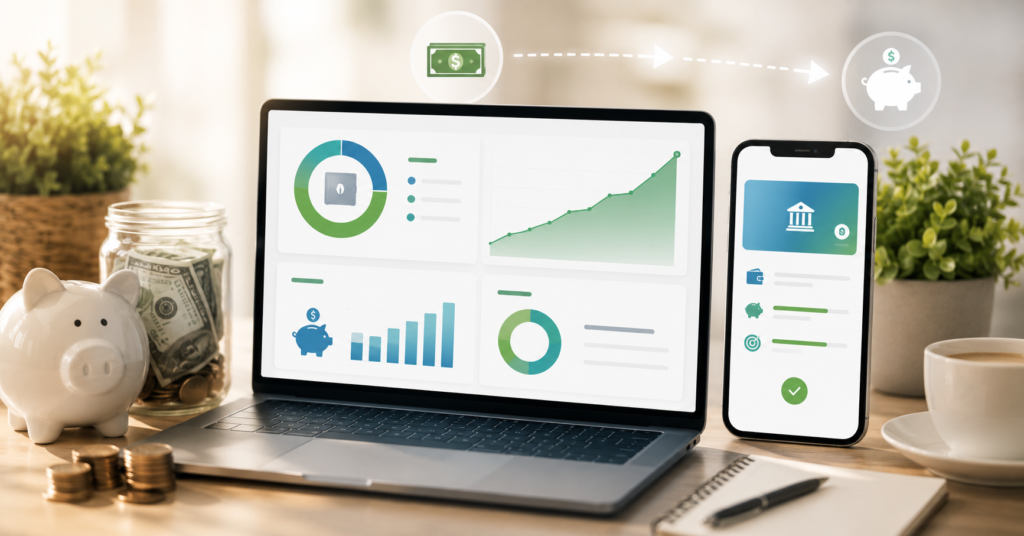
Building an emergency fund feels harder than it should in 2026. Inflation is still eating into household budgets, layoffs keep hitting industries that felt stable a year ago, and one unexpected expense can erase months of careful saving overnight. That’s exactly why more people are looking at high yield savings for emergency fund 2026 options instead of letting cash sit in low-interest accounts that barely register on a monthly statement.
The real shift is that high-yield savings accounts now pay rates worth caring about. Some are clearing 4% or even 5% APY — which means your emergency fund quietly grows while you sleep. Pair that with a disciplined savings system and some short-term spending cuts, and building real financial protection in a few months is genuinely achievable, not just optimistic math.
Why Does Life Feel Financially Unstable Without an Emergency Fund?
An emergency fund gives you options when life changes without warning. Without one, every unexpected bill becomes a crisis that pulls you further from where you want to be.
Why Rapid Economic Changes Make Emergency Savings Essential
Many households entered 2026 carrying more financial pressure than they planned for. Rent stayed high, groceries kept climbing, and credit card rates never came back down the way people hoped. That combination sets up a pattern that’s hard to break once you’re in it.
One car repair or emergency room visit lands on a credit card. Then the interest starts building. Then next month’s expenses are tighter because of last month’s debt. An emergency fund breaks that cycle before it starts — not by being large, but by existing at all. Even $1,000 set aside creates a meaningful buffer between a bad week and a financial spiral.
How Unplanned Expenses Destroy Household Stability
Unexpected expenses tend to cluster. A missed paycheck rarely arrives alone — it shows up alongside a car problem, a medical bill, or a home repair that can’t wait. Without savings, borrowing starts immediately, and recovery becomes slower and more expensive than the original problem.
That’s why financial stability matters more than investment returns for most people in the early stages of getting their finances together. Stability first, growth second. The stress that comes from having no cushion also affects decision-making in ways that make everything harder — you’re more likely to make expensive short-term choices when you’re operating in panic mode.
How Can You Use High-Yield Savings Accounts Strategically in 2026?
The single highest-leverage move for most people building an emergency fund right now is getting their cash into a better account. Traditional savings accounts are still paying rates that barely exist. Moving that same money into a high-yield account changes what’s possible.
Why High-Yield Accounts Beat Traditional Savings Accounts
Many traditional bank savings accounts still pay under 0.5% APY — sometimes far less. That means $5,000 sitting in a standard account earns a few dollars over an entire year. It’s not compounding your future. It’s just waiting.
High-yield savings accounts from online banks compete aggressively for deposits, and right now that competition is working in your favor. Rates above 4% APY are common, and some accounts clear 5% under qualifying conditions. That difference on a $5,000 emergency fund isn’t massive in absolute terms, but it’s real money — and it adds up faster than most people expect when combined with consistent deposits.
Three accounts that keep coming up in 2026 discussions:
- Varo Bank — up to 5.0% APY on qualifying balances up to $5,000
- GO2bank — around 4.5% APY with built-in savings goal tools
- Axos ONE — approximately 4.21% APY with integrated checking and savings
How to Compare Interest Rates and Account Benefits
APY alone shouldn’t make your decision. The qualifying conditions, transfer speed, minimum balance requirements, and mobile experience all matter — especially if you’re planning to automate deposits and check progress regularly.
Varo stands out for beginners because the rate is strong and the account structure is straightforward. I moved my emergency fund to Varo and earned more in three months than I had all of the previous year sitting in a traditional savings account. If you want to see the current rates and terms, check Varo’s high-yield savings details here.
GO2bank works especially well for people who want goal-based automation built directly into their banking app. Axos ONE fits users who want a more traditional digital bank setup without sacrificing competitive rates.
How Can You Build an Emergency Fund Within 3 Months?
The people who build emergency funds quickly treat it like a project — with milestones and a timeline — rather than a vague intention they revisit when they remember to.
Step-by-Step Savings Plan to Reach $10,000 Faster
Breaking the goal into stages makes the number less intimidating and keeps momentum moving:
- Stage 1: Hit the first $1,000 buffer — the most important milestone
- Stage 2: Reach one full month of essential expenses
- Stage 3: Expand to three months of coverage
- Stage 4: Push toward longer-term financial security
Focusing on weekly progress works better than staring at the final number. Saving $300 a week feels manageable. Saving $10,000 feels abstract. Same goal, very different psychology.
Many savers also find it helpful to separate their emergency fund into buckets rather than keeping it as one lump sum:
- Core emergency buffer
- Medical expenses reserve
- Car repair fund
- Income gap protection
That structure reduces the temptation to pull from the emergency fund for things that feel urgent but aren’t true emergencies.
How the “No-Spend” Strategy Accelerates Savings
A No-Spend month works because it creates immediate cash flow without requiring a raise or a second job. For 30 days, all non-essential spending stops:
- Restaurant and takeout meals
- Impulse online purchases
- Subscriptions you’re not actively using
- Entertainment and convenience spending
The point isn’t to live like this permanently. The point is speed. Most people who do a serious No-Spend month discover they can redirect $300 to $600 into savings without changing anything they actually care about long-term. Pair that with a high-yield account and the first stage of the emergency fund fills faster than expected.
How Do Automatic Savings Systems Remove Human Failure?
Willpower is a finite resource. Automation isn’t. The most effective emergency fund strategies don’t rely on making a good financial decision every month — they make the good decision once and let the system repeat it.
How Automatic Transfers Build Savings Without Willpower
Most people don’t fail at saving because they lack knowledge. They fail because motivation runs out and life gets in the way. An automatic transfer doesn’t care about either of those things.
The setup that works best is simple:
- Paycheck deposits
- Automatic transfer moves savings before spending starts
- Emergency fund grows in the background
This shifts savings from “whatever I have left at the end of the month” to a fixed priority that happens before any discretionary spending has a chance to absorb it.
Which Financial Apps Make Emergency Saving Easier in 2026?
GO2bank built goal-based savings automation into the account itself, which makes it genuinely useful for people who want to set a target and stop managing it manually. I set up a savings goal on GO2bank and stopped thinking about it — the money just accumulated because the automation handled it without me. If you want a simple structure that runs in the background, explore GO2bank’s automated savings features here.
Apps like Rocket Money, Monarch Money, and YNAB are also worth looking at for tracking spending behavior and savings progress in real time alongside your primary account.
Free Bonus: Download the Free Emergency Fund Tracker PDF and map out exactly how fast you can reach your first $1,000, $5,000, or $10,000 safety net using the approaches in this guide.
FAQ: What Do Most People Ask About Emergency Funds in 2026?
How can I save $10,000 for an emergency fund within 6 months?
The fastest combination is aggressive short-term spending cuts, consistent automatic transfers, and a high-yield account earning above 4% APY. Breaking the goal into weekly targets — around $385 per week for a 6-month timeline — makes the pace feel manageable rather than abstract.
What is the fastest way to build 3 months of living expenses?
Start with a smaller buffer first — $1,000 creates immediate psychological and financial relief. Then automate a fixed transfer immediately after each paycheck, and run a No-Spend period for the first 30 to 60 days to accelerate early momentum.
What is the best high-yield savings account for emergency funds in 2026?
Varo Bank, GO2bank, and Axos ONE are among the most discussed options right now based on APY, account accessibility, and digital banking features. Always verify current rates directly on each provider’s website before opening anything, since rates shift.
How prepared are most people financially in 2026?
A significant portion of households still don’t have enough emergency savings to cover one month of expenses — let alone three. That’s part of why high-yield accounts and automated savings tools have grown so quickly. The demand is real because the problem is common.
What is the most effective tip for building emergency savings on a low income?
Automation matters more than income level. Small consistent transfers — even $25 or $50 a week — build a real fund over time. Consistency compounds. Occasional large deposits that depend on perfect months don’t.
The best high yield savings for emergency fund 2026 approach isn’t about finding the perfect account and waiting. It’s about opening a strong account today, setting up automatic deposits, and letting time and consistency do the work that willpower can’t sustain alone.
Want the full system? Join the list and get the Free Emergency Fund Strategy Guide PDF — savings trackers, No-Spend templates, and step-by-step automation strategies included.